
7 Artificial Intelligence Considerations
Whether crafting a single prompt or an entire system, success lies in the preparation - here’s a framework!
The allure of AI is often in its speed. It is incredibly tempting to open a chat interface, type a quick thought, and see what magic returns. But in a professional setting, "seeing what happens" isn't a strategy—it's a gamble.
Organizations everywhere are rushing to adopt AI to optimize processes and drive digital transformation. Yet, many initiatives stall or produce lackluster results because they skip the foundational work. They jump straight to execution without assessing the landscape.
Whether you are engineering a complex prompt for market analysis or architecting an organizational workflow, the strategic pillars remain universal. Before you commit resources—before you hit "enter"—you need to pause and evaluate your strategy against seven essential considerations.
Here is your framework for AI implementation, broken down into seven "Consideration Cards" to guide your planning.
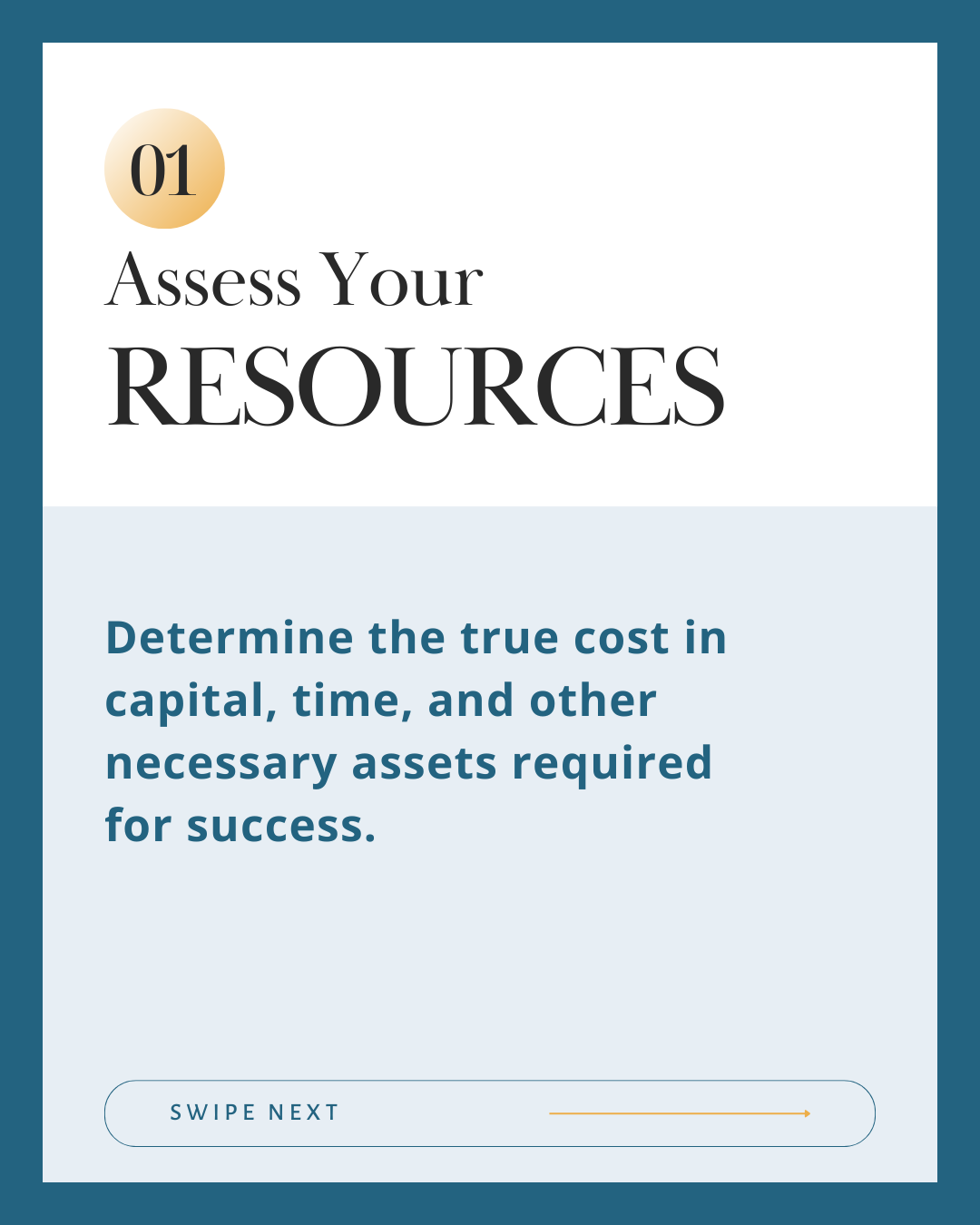


1. Resources
AI is never truly "free," even if the initial barrier to entry seems low. Implementation requires a clear-eyed view of investment. Of course there is technical infrastructure investment (e.g., server, license cost), but what about the sustainability cost or the human element (the time needed for training, the man-hours required to verify outputs, etc).
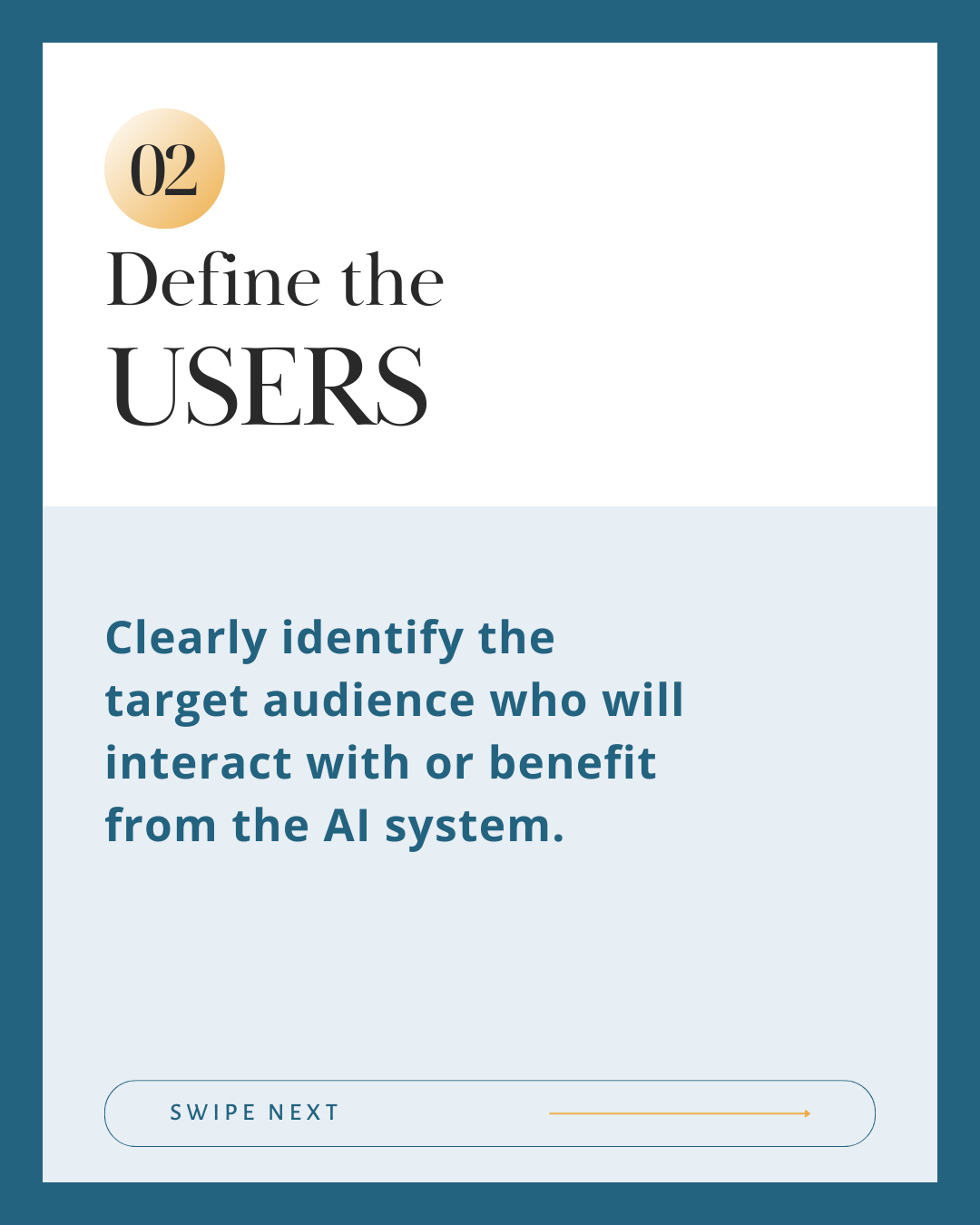
2. Users
A tool is only valuable if it serves its intended audience effectively. Are you building this for internal teams to speed up workflows, or for external customers to improve their experience? Defining the "who" helps dictate the “why” and "how" while also helping your team get unstuck when difficulties arise.
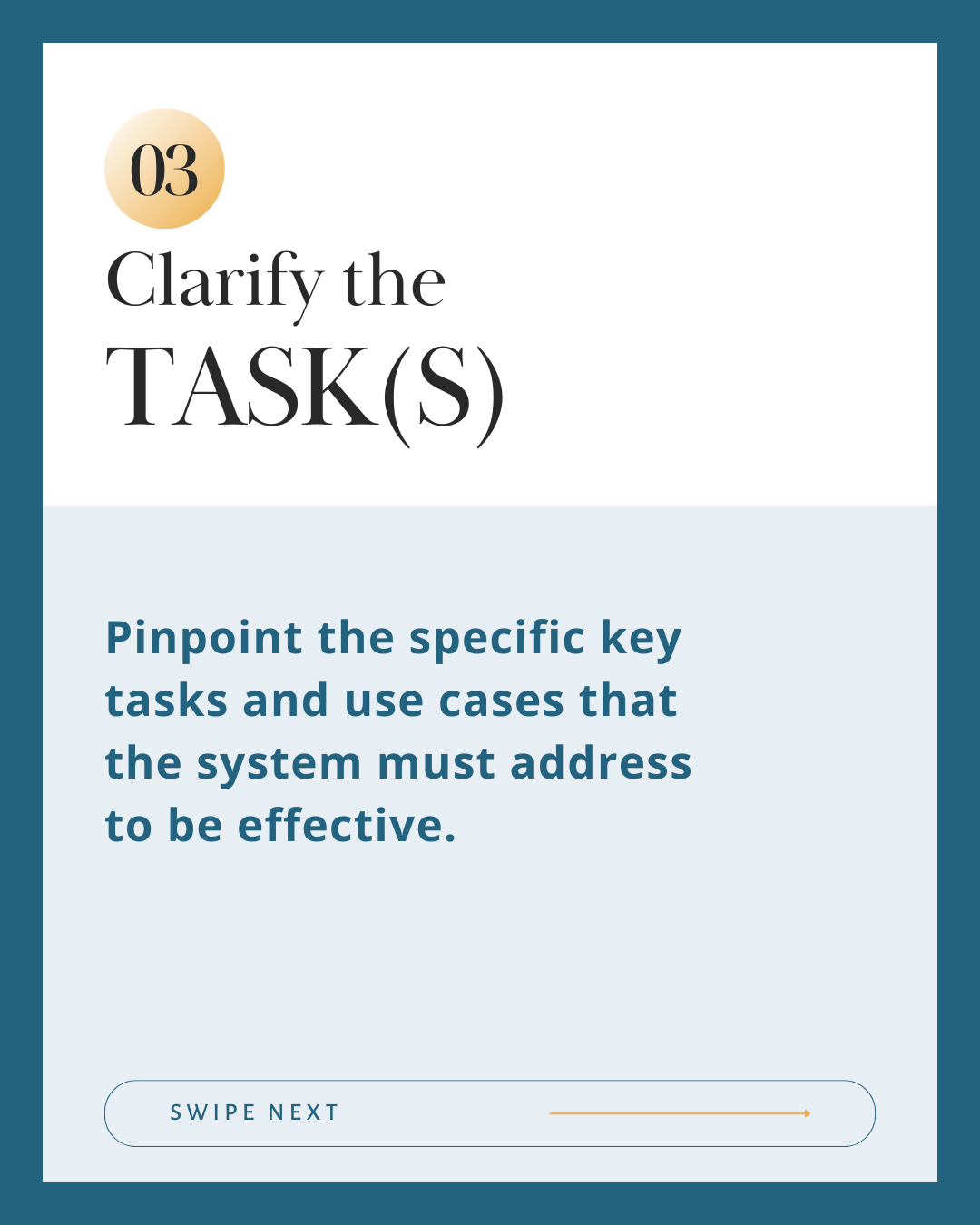
3. Task
Vague goals lead to vague outputs. To get a precise result, you need a precise definition of the problem you are solving. What specific business process are you trying to automate or augment? Drill down into the exact use cases before choosing your tools.
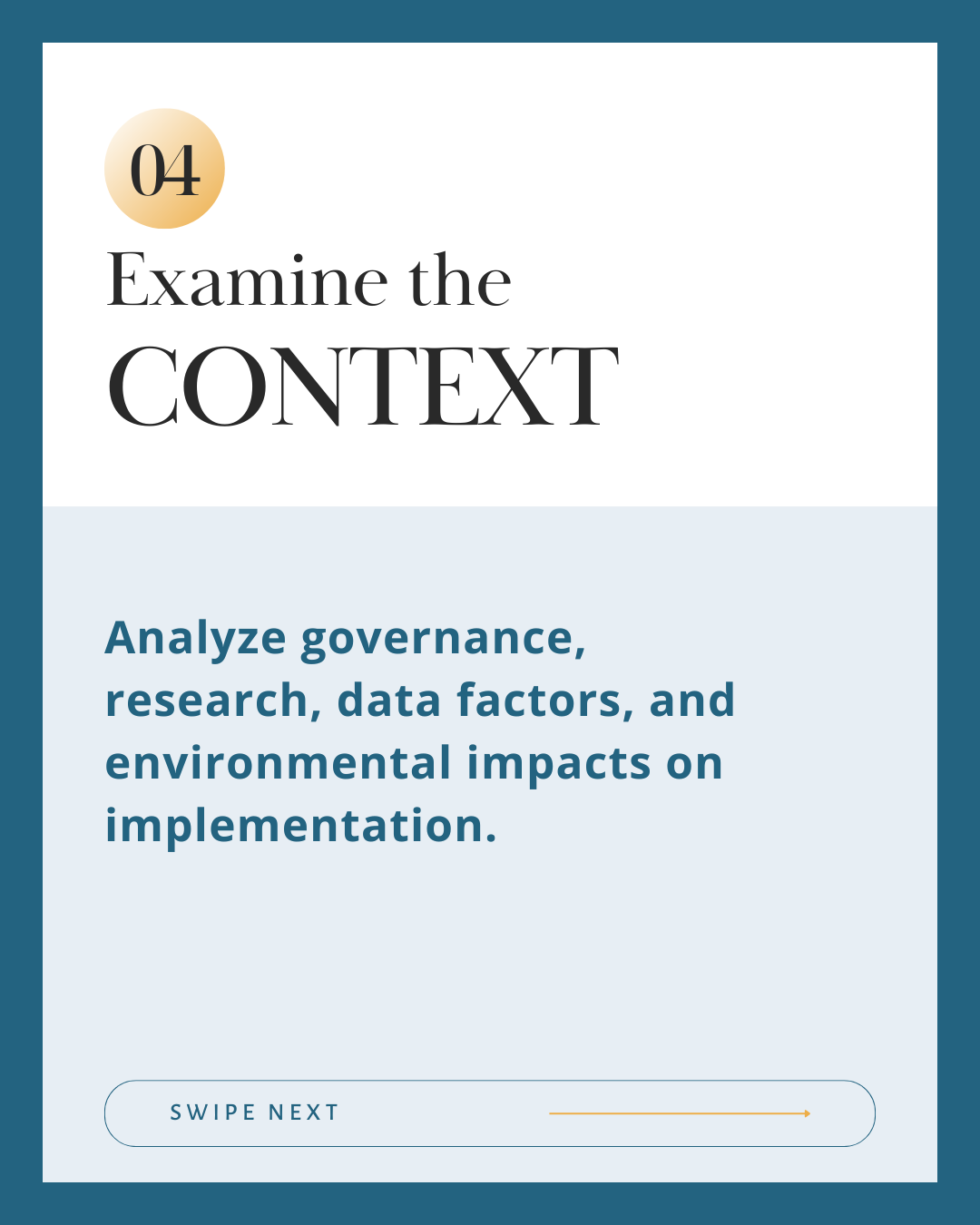
4. Context
This is the layer that protects your organization. AI operates within legal, ethical, and environmental frameworks. What is the governance surrounding the data you are feeding the AI? Are there risks of bias? What contextual factors will impact how the output is received?
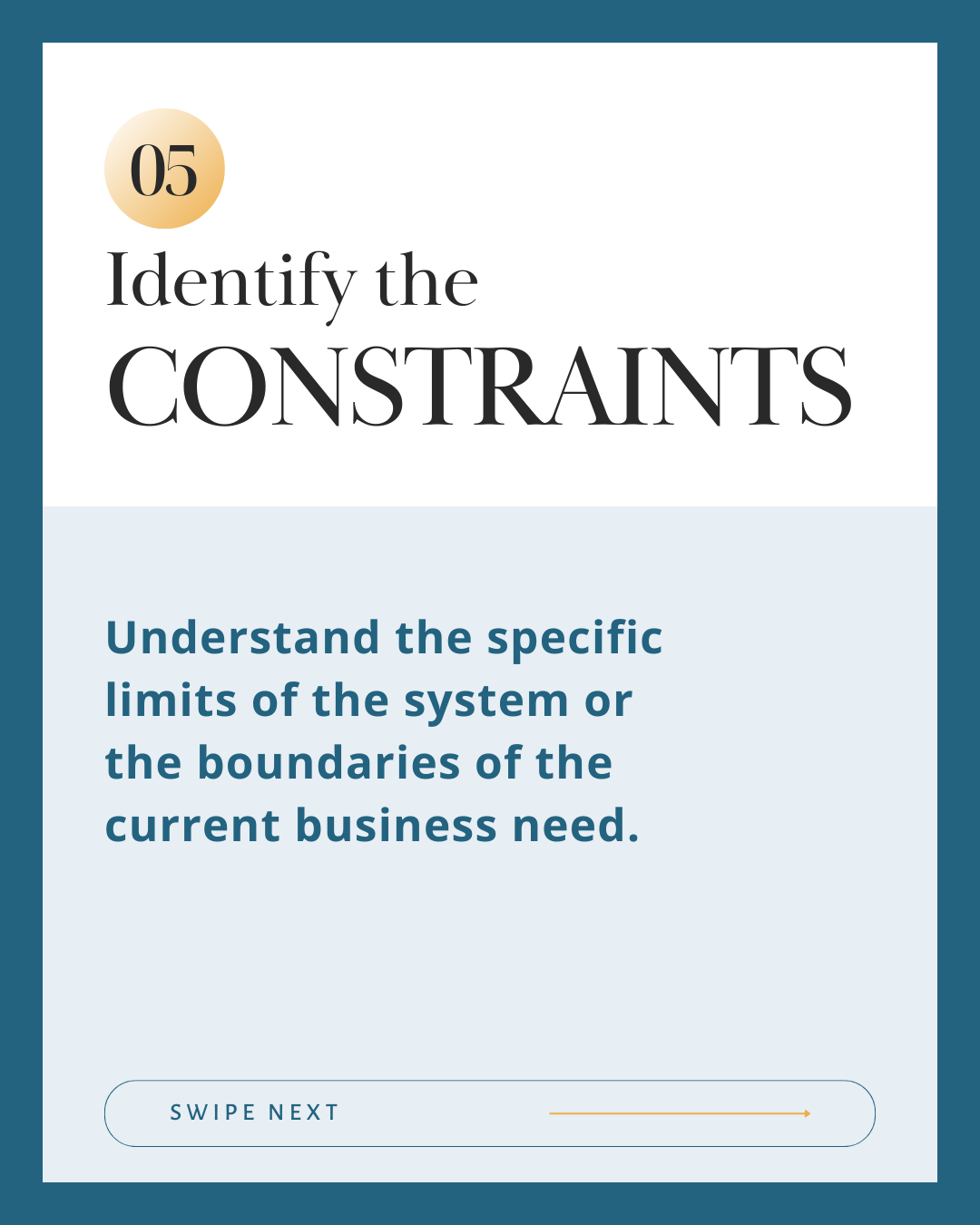
5. Constraints
Successful implementation requires realism. AI is powerful, but it has limits. You must identify the boundaries of the technology (e.g., token limits, potential for hallucinations) as well as the hard constraints of your business need (e.g., budget caps, strict deadlines).
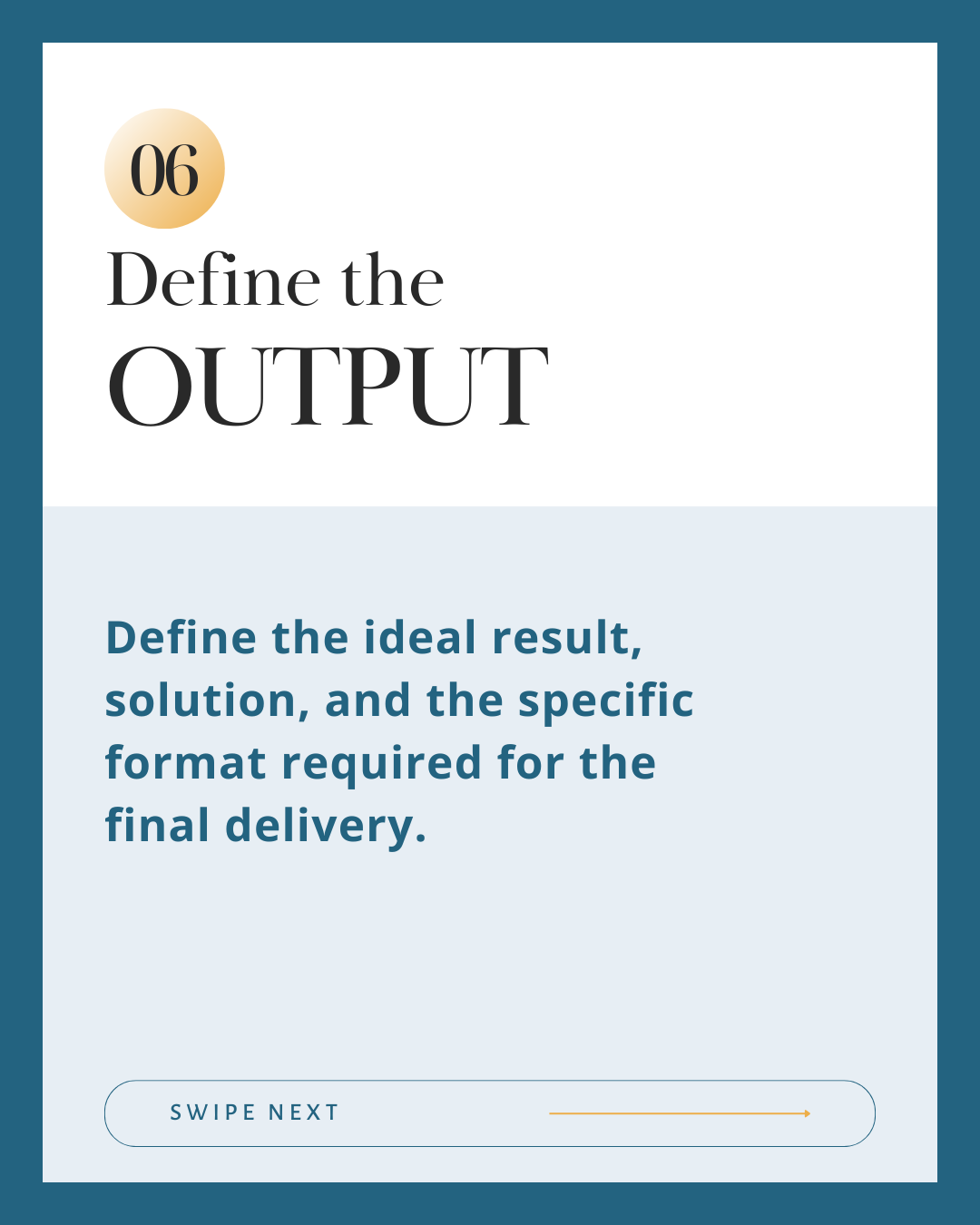
6. Output
Begin with the end in mind. If you don't know exactly what you want the AI to produce, you won't get it. Are you looking for a summarizing paragraph, a structured JSON file, Python code, or a photorealistic image? Defining the format is just as important as defining the content.
7. Communication
How will this new tool or output be presented to the world? If the AI is facing customers, transparency is key—do they know they are interacting with AI? Furthermore, does the AI's output align with your established brand voice and tone?
Take our AI Readiness assessment, then follow us on our Blog, LinkedIn, and Instagram for more insights like this.
The Fundamentals Are Universal
As you move from simple prompting to complex systems, the scale of these questions grows, but the core questions themselves do not change.
The risks associated with "Context" are higher in an enterprise system than a single prompt, and the "Resources" required are vastly different. But if you ignore those pillars at either end of the spectrum, you invite failure.
Ask yourself:
Do you feel these questions change when the scale grows, or are the fundamentals universal?
Which of these are already on your radar?
Which haven't crossed your mind yet?
Success in AI isn't just about the technology you use; it's about the questions you ask before you create and use it.

This article was written by Sylvia Bargellini
She is a creator of innovative human-centric products and services that enhance emerging technology process efficiencies, experiences and profits by identifying unique creative business opportunities. With over a decade of industry knowledge Sylvia guides interdisciplinary teams towards effective product optimization.